
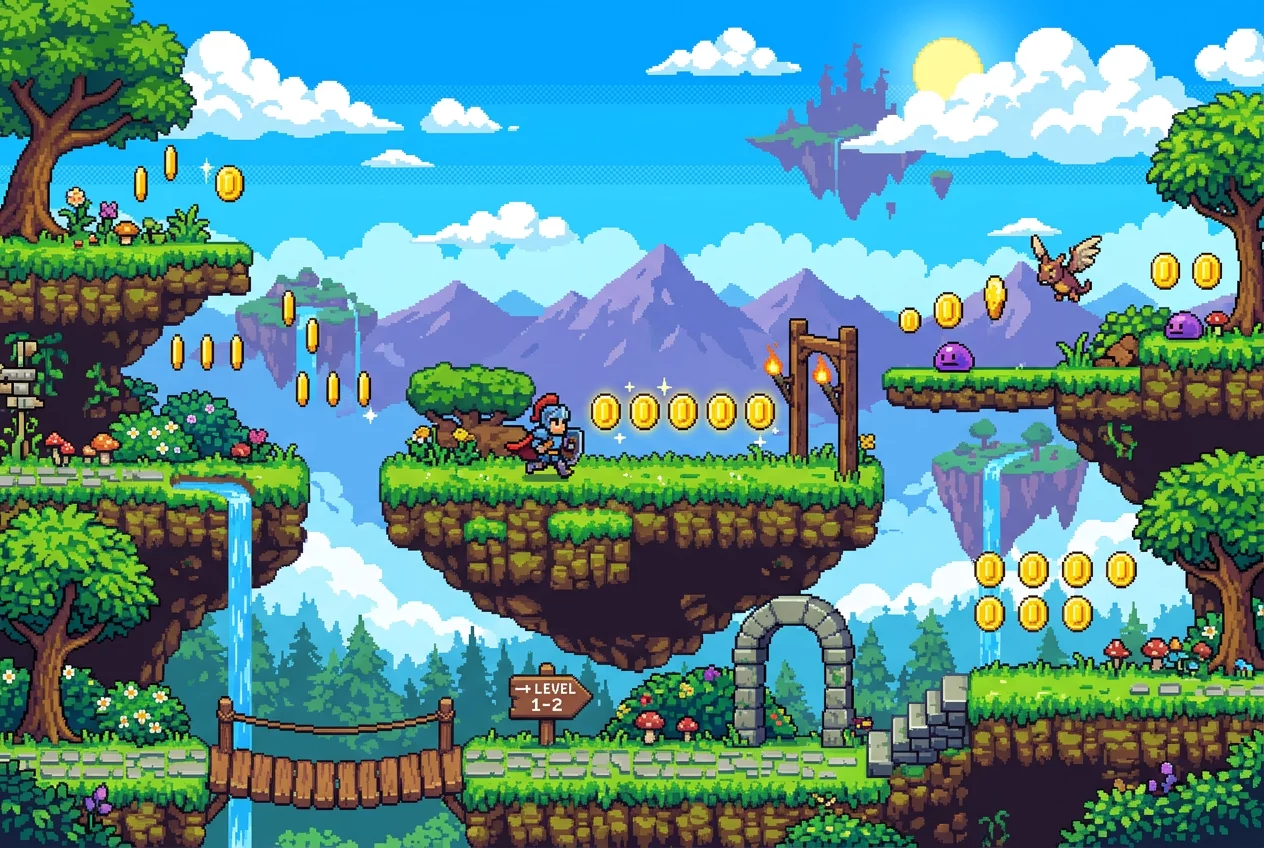
Platformers are the foundation of gaming history. In these vibrant landscapes, a single pixel-perfect jump can mean the difference between claiming the crown of victory or starting the level over. This collection celebrates the mechanics of movement and the artistic evolution of the genre that keeps us leaping forward.
The Evolution of Jumps and Gravitational Pull
Early iterations on 8-bit systems relied on rigid momentum. You had to commit to your leap the moment your thumb pressed the button. As technology reached the 16-bit era, developers introduced air control, allowing players to adjust their trajectory mid-flight. This shift transformed platformers from simple obstacle courses into expressive playgrounds of physics.
Level Design as a Visual Narrative
Great platformers tell stories through their environments. Floating islands, mechanical fortresses, and overgrown jungles aren't just backgrounds; they dictate the rhythm of play. A well-designed level teaches the player its rules through silent guidance—a placement of a coin here, a slightly distant ledge there. Every element serves the flow of movement.
- Rhythmic Flow: Top-tier games feel like a song where the jumps represent the beat.
- Visual Clarity: Identifying hazards instantly is crucial for high-speed action.
- Fair Challenges: Difficulty should come from skill, not unpredictable camera angles.
Whether it is the frantic sprint of a blue hedgehog or the precise climbing of a plumber, the genre persists because it taps into a fundamental human desire for mastery over space and gravity. These games are not just about reaching the end; they are about how stylishly you can fly through the pixelated air.
Multi-platform (Retro & Modern)
2026-04-10 (Curated Update)
- Pixel-perfect collision detection
- Diverse environmental biomes
- Secret areas and hidden crowns
Olivia Stone
19/05/2026This list nails the rhythm of platforming history. It feels balanced between technical precision and the pure joy of movement.