
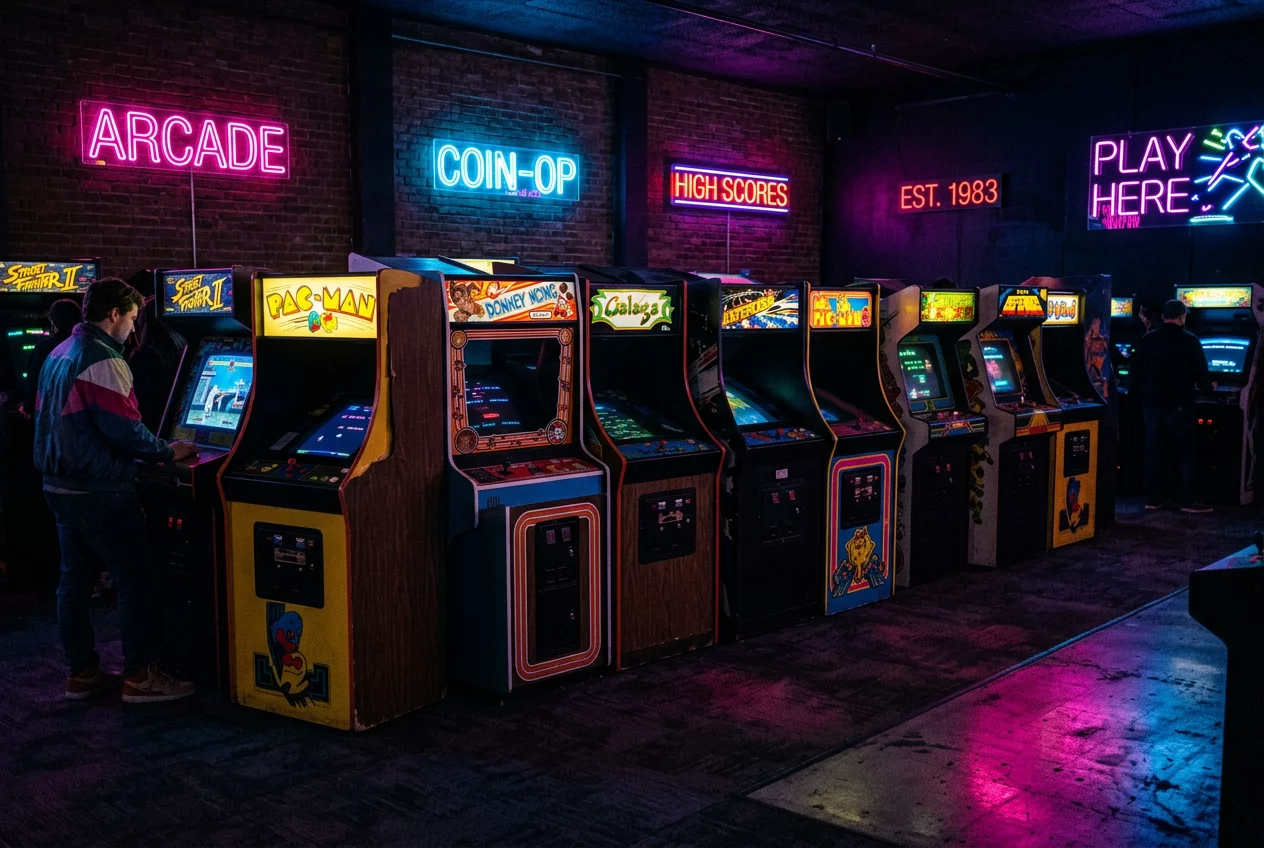
The Enduring Legacy of the Arcade Cabinet
Long before home consoles became the center of the entertainment universe, a different kind of monarchy ruled the local mall and corner store. The arcade was a vibrant, noisy, and neon-lit sanctuary where pixels were huge and competition was fierce. Arcade Kings explores the machines that built this culture, from the simplistic perfection of early maze games to the complex, sprite-scaling combat of the early nineties. These wooden cabinets were more than just hardware; they were monuments of engineering and artistic design.
Artistry in Wood and Glass
What many modern players forget is the physical presence of these giants. Each machine featured hand-tailored side art, vibrant marquees that glowed like beacons, and control panels built to survive thousands of frantic hours. Each manufacturer had its own philosophy, creating distinct tactile experiences that a modern controller simply cannot replicate without a dedicated arcade stick.
- 1 The transition from vector displays to raster graphics redefined visual storytelling in small quarters.
- 2 Coin-op mechanics demanded immediate engagement, creating the high-intensity gameplay loops we still see in modern mobile hits.
- 3 Local high-score tables sparked the first real social networks for gamers.
"The arcade was the ultimate filter. If a game wasn't immediately fun and challenging, it didn't survive more than a week in the floor rotation."
Preserving the Neon Spirit
Today, the movement to restore and maintain these original cabinets has reached a fever pitch. Collectors and technicians spend years tracking down original PCBs and CRT tubes to ensure the colors bleed exactly the way they did in 1985. It is a labor of love that keeps the soul of the arcade alive for a new generation that may only know these titles through digital emulators.
Original Arcade PCB / Coin-Op
1980 - 1995 Era
- Micro-switch Joysticks
- Raster CRT Displays
- Original Side Art
Nina Volkov
18/05/2026The cabinet-era context makes this feel like a proper museum note, not just a ranking. I especially liked the way the high-score culture was framed.